

[This post contains spoilers for Houseki no Kuni through Volume 11. If you want to read this absolute masterpiece all the way through on your own, which i heavily recommend, do so now! Otherwise, be warned.]
When I was first reading Houseki no Kuni (a.k.a. “Land of the Lustrous”) I was stunned by the sheer emotional rollercoaster of the last few volumes. An innocent story about anthropomorphic gemstones, over the course of 11 volumes, becomes a Pulitzer-worthy tale of abandonment, acceptance, and revenge. Since then, I have spoken to many other people who I have either bothered into or discovered reading HnK, and every time, without fail, they were left with one big question: Was Phos in the wrong? And if so, why?
The most human emotion is vengeance.
Aechmea
Chapter 86, aptly titled “War”, is probably the most glorious, flashy, and beautifully human piece of fiction I have ever read. 10 volumes of growing tension finally culminate in what, for me, was a wonderfully cathartic– and equally depressing– display of retribution. Phosphophyllite, thinking they are finally breaking even on millenia of torture and neglect, arrives from the moon to destroy their old gem-friends, and is left behind in their dust to suffer the ultimate fate: 10,000 years of solitude. Tragic, yes, but also shockingly introspective: as Phos becomes stronger, they also become more and more human– emotionally speaking. Their bubbly personality sours, and their reactions to their mistreatment slowly begin to converge with the reader’s own, allowing us to empathize with them more and more. We not only read, but understand Phos’s increasing awareness of their situation. And, when Phos finally goes on their vengeful rampage, we share their burning hatred, if only for a moment, until, with all the gems who have wronged Phos gone, both us and them are left alone with our thoughts– for an eternity.
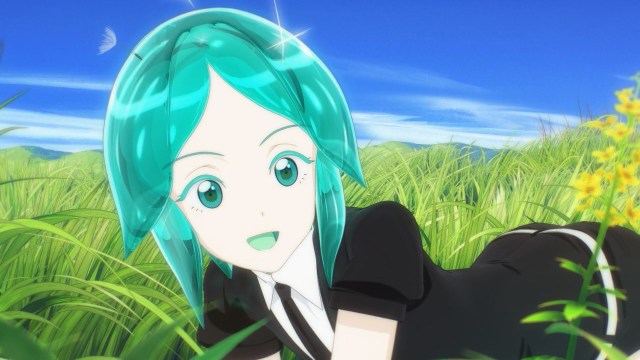
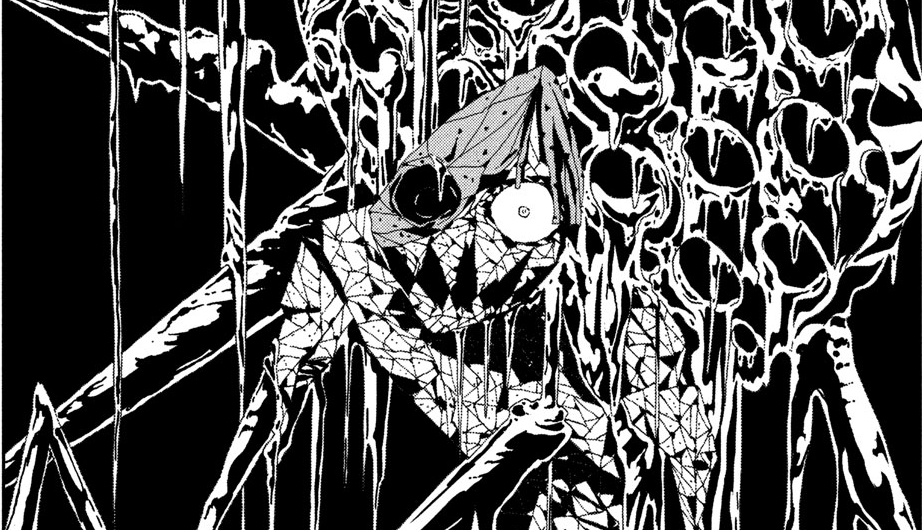
Before and after (maybe ignorance really is bliss)
Perhaps most disturbing, though, are the gems’ pleas for mercy. Euclase’s pained “take me to the moon” and Cinnabar’s heartwrenching “I’m sorry I was never able to understand you” finally turn the reader in the gems’ favor, but it is far too late for Phos, whose own pleas always fell on deaf ears. Perhaps it is that very same encounter with Cinnnabar, whose struggle with weakness has always mirrored Phos’s own, where the slaughter reaches its climax. Two gems, ignored and forgotten by the world: one turned to a somber loneliness, the other to a burning rage. The fight, like all others, ends with a final message to Phos; although this one is just barely sourer.
Thanks to you, I could be with everyone else. I enjoyed it. Thanks […] for your promise.
Cinnabar

Cinnabar’s final words
There is one last low blow before Phos reaches– and kills– the gems’ leader, Kongo-sensei: On the way to the final chamber, Phos sees a bright, bubbly young gem of light blue-green puffy hair, prancing around a field joyfully. Phos, a ghastly mess of gold alloy, broken crystal, and boiling rage, faced with a vision of their old, naive self, mutters “adorable,” and staggers, determined, towards fate.
Whether Phos was in the wrong is intrinsically a question of human ethics. Is it right to take justice into one’s own hands? Should immoral acts be punished with immoral acts? The most disturbing realization of all, perhaps, is that none of these questions matter. Phos is not acting out of free will, at any given point in time. Phos’s trip to the Earth– and their subsequent massacre of the gems– was due to Aechmea, ruler of the Lunarians (basically Moon people, for the uninitiated) brainwashing Phos to force Kongo-sensei to pray, so that the Lunarians may finally be allowed to die. Phos was used as a pawn, just as they had been the entire time, and therein lies the real tragedy of Houseki no Kuni: Phos, who only ever wanted to help, was used. Not needed, in such a way that one feels useful, but manipulated, so that their incredible potential was always pointed at the enemy. No one ever took the time to understand them, or care for them. The real monster was never Phos, but everyone else.
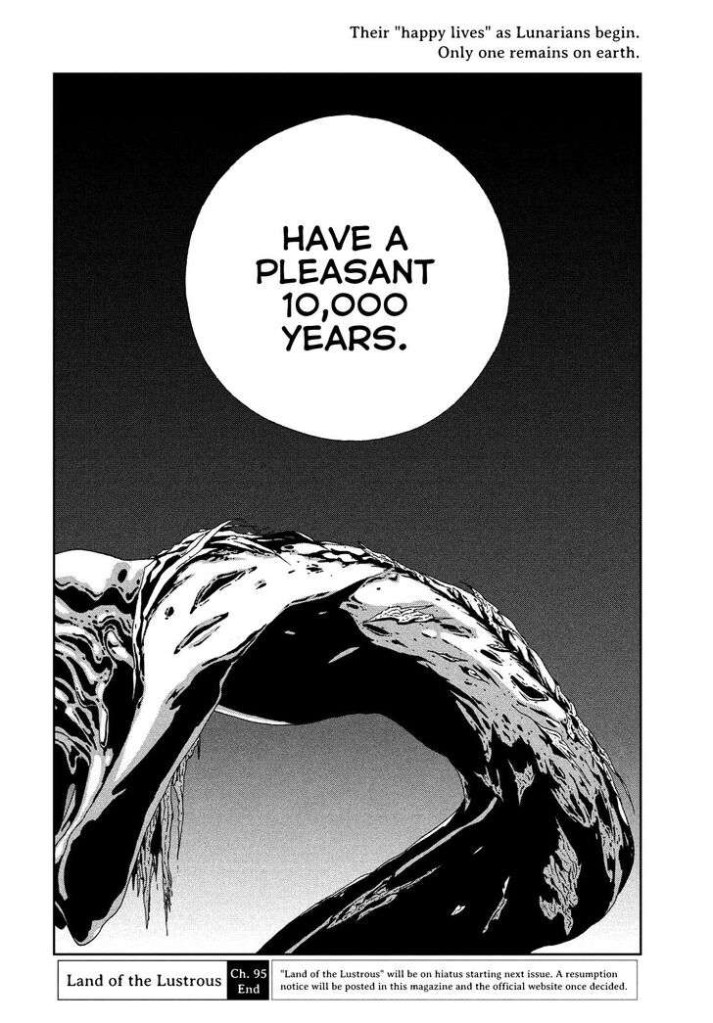
Phos’s character is nothing short of tragic, but perhaps that’s what makes it so charming.
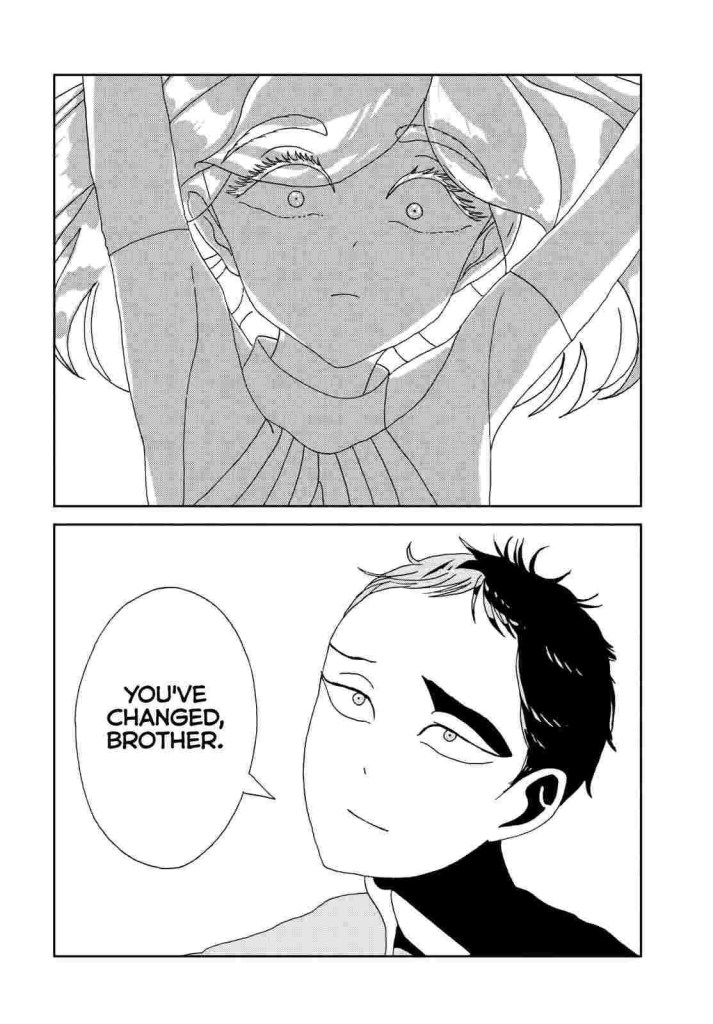
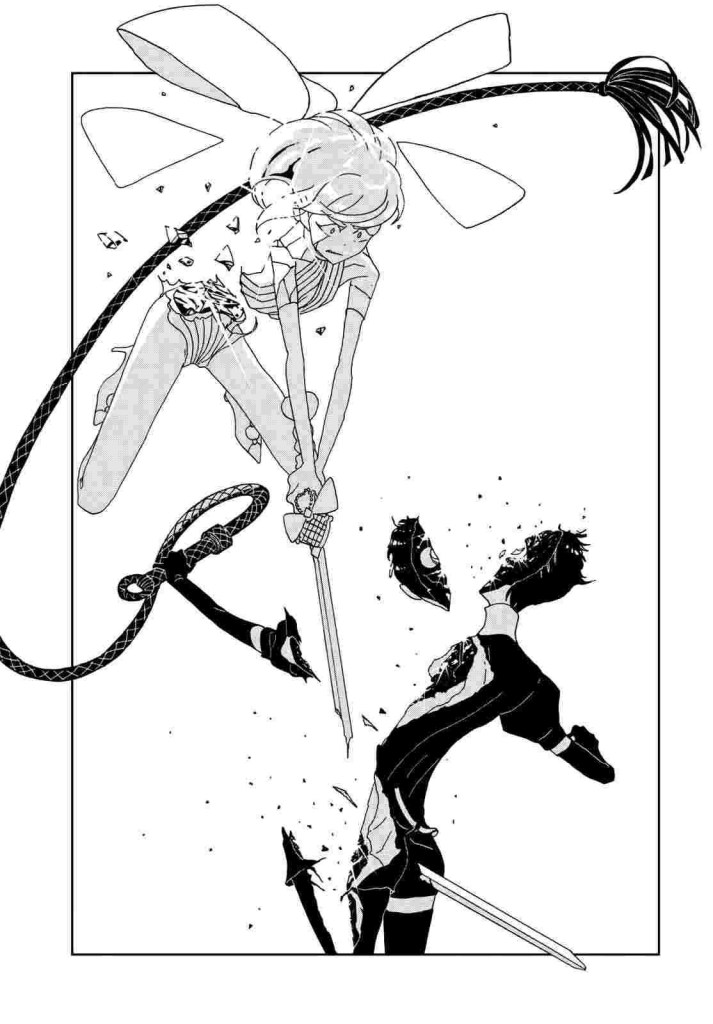
There is one last scene in Houseki no Kuni that left perhaps the deepest impact on me, and which I rarely see brought up in discussions about the series. When Phos arrives on the Earth to take revenge on the gems, they are accompanied by another bubbly character whose presence– and hair– is a staple of the series: Diamond. In the first few volumes, a strong dynamic is established between Dia’s joy and innocence and the sheer power and strength of Dia’s “brother”, Bort. Dia is the happy one, Bort is the somber one. Dia shatters easily, Bort is incredibly resilient. Dia looks up to Bort, Bort does not care.
During Dia’s time on the Moon alongside Phos, however, this dynamic is flipped on its head. Dia’s ego spirals out of control, whilst Bort becomes far more humble and docile. The tension comes to a head when, arriving from the Moon, Dia challenges Bort to a fight. Two siblings, once united, now in opposite sides of a needless war. The emotion of this scene trascends words, and can only truly be experienced once. As Dia leaps towards Bort, ordering the Lunarians to cheer louder, the contrast is painfully glorious. In one fell swoop, both of them destroy each other. And thus ends the greatest character arc I’ve had the pleasure of witnessing: not with a bang, but with a whimper.
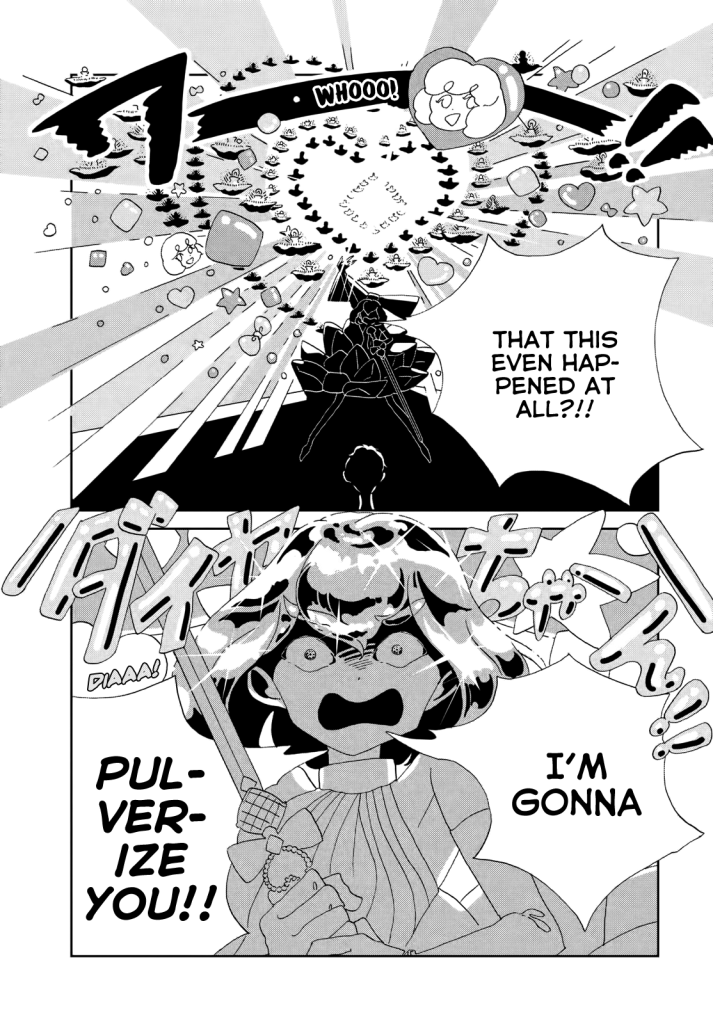

Someone like you, who is beloved even on the moon.. couldn’t understand what it feels like to be lonely.
Cinnabar


 Tiny Hydra
Leave a reply to Peepeepoopoo Cancel reply