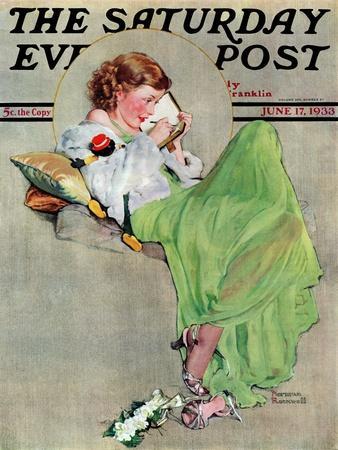
Hi everyone! I wrote this in a hate-fueled rage last year, and I never had a chance to share it. I don’t really know exactly what I wanted to do with it, but here we are. After a few minor edits, here’s 16-year-old me’s seething distaste for public school dress codes. Enjoy!
The Spark that Started it All
I’m a sophomore (now rising senior) in high school. The other day, we had our first assembly of the year. I hadn’t been to one since the beginning of the pandemic. I was looking forward to it; I got to miss the last half hour of Spanish class, and God knows I couldn’t stand another minute of reading a letter from Hernán Cortés to Charles V of Spain. So, we all make our way to the auditorium, get packed like sardines into these seats from the nineties that probably haven’t been cleaned since then, and wait. We waited for a warm welcome to the school year, a reassurance that it was going to be worlds better than the virtual disaster that occurred during the height of the pandemic.
The first five minutes looked prospective. We were told the same thing we get told every year, about how it’s going to be a great year jam-packed with awesome adventures and wacky stories. A bit cheesy, but a nice sentiment nonetheless. Another teacher started fiddling with a powerpoint presentation, and one of the vice principals stepped up to the front. With a microphone in hand, he goes, “I’m here to talk about the dress code.”
In my ten (now eleven) years of schooling, I’ve never seen the way girls dress be as much of an issue to male students as administrators make it out to be. I’ve never seen a boy infatuated with a girl’s shoulders, knees, ankles… whatever. I do not, and probably will never, understand why adults are so obsessed with how teen girls dress. As I’m sitting there, mindlessly tuning out the vice principal’s drone about how breaking the dress code will make colleges deny me admission and therefore ruin my future, I begin to think. I think about how thousands of years of human history— golden ages, vast intellectual empires, revolutionary revolutions— have led to this moment. How? How is it, that of every possible conceivable path humanity could have taken, it chose the one where it micromanages every aspect of a teen girl’s life? And I kept thinking. I thought, “why not look into this?” I want to know exactly what led to me being sat in that old, dusty auditorium and lectured about showing skin for the millionth time.
I: Origins
Almost every civilization was born with some degree of a patriarchy. I’m going to focus on Europe, half because the continent was historically far more patriarchal than any of its contemporaries, and half because of its global influence from imperialism and missionary work.
The great classical civilizations weren’t exempt from restricting women’s clothing, despite this utopian light we paint them in. Married women in ancient Rome wore stolas, which were long, formless robes that extended down to the feet, to show their marital status. Basically, they served as a marker for how “respectable” a woman was: a married woman was identified by her stola, and an unfree prostitute by her toga. Roman men used this to their advantage; it was a big neon sign that highlighted who it would socially acceptable to sleep with (or rape). Ancient Greek women wore veils on their faces to “extend their living spaces,” which gave them a social thumbs-up to enter male-dominated areas without causing an uprising (because a woman in a room with men was scandalous, I guess).

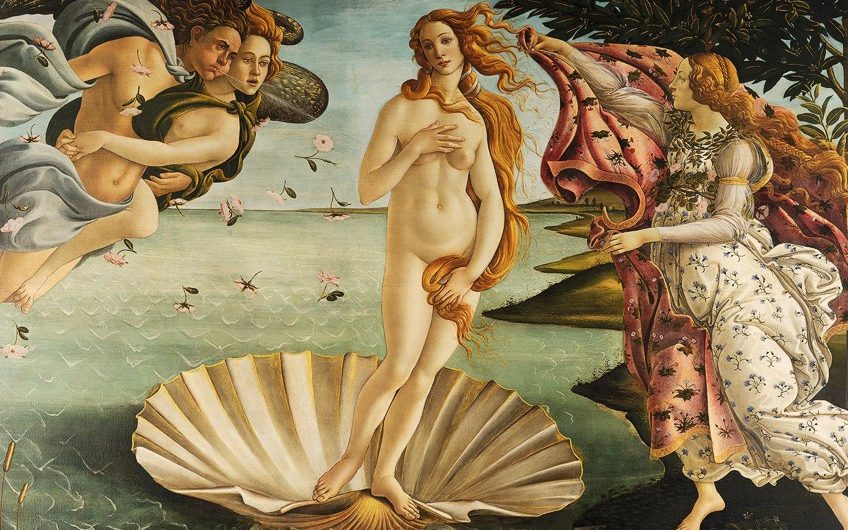
Even the Renaissance, a movement that emphasized humanism, limited its progressive fruits to rich men. The only context in which the image of a nude woman was acceptable was in art. Even then, these depictions were divorced from what women actually looked like; they were idealized.
In this era, clothing was a reflection of one’s social status and “inner self.” Sumptuary laws— which were based on subjective moral codes to limit extravagance and appearances— were passed in Italian city-states to target women, dictating how much fabric was to be used in their dresses, how long they could be, the kind of jewelry they wore, etc. Some were even charged for not wearing proper attire. Women were expected to dress modestly; a commentary on this legislation written in Florence (circa 1433) claimed that the law had to “restrain the barbarous and irrepressible bestiality of women.” Why celebrate the human figure in theory only to connote it with sin in practice?
A few decades later, Christopher Columbus latched the Spanish crown’s claws into the Antilles. Conquistadors, besides decimating indigenous populations, spread Christianity and its patriarchal ideals throughout the Americas. Aztec women had a broad range of jobs they could have chosen from, but those choices were limited to the traditional gender roles we’re familiar with today because of the Catholic Church’s influence (damn you, Hernán Cortés!).

The patriarchy was strongly fortified in Victorian-era England. Unsurprisingly, women wore modest clothing like long dresses and bonnets.

And now, in the modern west, there aren’t many restrictions on anyone’s clothing in public (please note that I am being very broad when I say this). In private areas, such as businesses or schools, women have to follow a dress code. So do men, but it’s more enforced on women. No tank tops, nothing above the knees, and the like.
Okay, we get it. Women haven’t been able to dress as freely as they’ve wanted to. But what exactly is it about shoulders or midriffs that are so distracting?
II: Why is my body inherently sexual?
Why can’t I wear tank tops to school? It’s honestly ruining my life. My outfits would be so much better if I could. I can’t wrap my brain around what’s wrong with it. Boys aren’t distracted by shoulders. Like I said before, I’ve never heard of anyone drooling over the joint that connects an arm to the body.
Way back when, a woman’s shoulder was seen as a bit scandalous. John Singer Sargent’s Portrait of Madame X stirred quite the controversy by mixing seductiveness and wealth in his 1883 oil painting. The model’s right arm strap was originally falling off her shoulder, and that, combined with her low neckline and exposed collarbone, proved to be too saucy for Parisian socialites. However, Sargent didn’t paint it to villainize the female form, but to challenge the norms of the wealthy sphere in 1800s Paris.

Well, what about knees? Why do they have to be covered? Shocker: I literally don’t know why. I’ve searched everything I can think of and I haven’t found anything correlating knees and sexuality. I swear, my search history makes it look like I have a knee fetish.
At the end of the day, it’s girls as a whole that have been sexualized, not bits and pieces of them. But I’m still confused as to why. Yes, historically women were treated like objects. In many parts of the world, they still are. But, in America? The land of the free? Do we not remember that women were granted the right to vote in 1920?

That was barely 100 years ago. Wifebeating was so normalized until the 1960s and 70s, where anti-rape and abuse movements caught on and some degree of legislative change took place. Although all sexes and genders are seen equally (to some extent) in the eyes of the law, they’re not the same socially. When a feminine-presenting person is questioned after being assaulted, they’re not just asked about their outfit at the time of their attack for funsies. It’s a systematic weathering of confidence that shifts the blame of the crime onto the victim.
III: Why in school?
Schools started implementing dress codes and uniforms in the 1980s and 90s when administrators noticed that kids started dressing more “inappropriately” and “defied superiority.” …Okay? It’s not like anyone was going to show up with a t-shirt saying “Principal X smells like wet socks.”
Dress codes now clearly target teenage girls.
I’ve seen boys wearing basketball jerseys and booty shorts through the halls with no care in the world. On the other end of the spectrum, I once saw a teacher (who was wearing a tank top) dress code my friend for showing a sliver of her midriff.
Girls being pulled aside and told to cover up because they’re “so distracting” internalizes the sense that boys’ education are more important than theirs. Why must we be publicly embarrassed in a space that is supposed to be welcoming?
I understand that schools want everyone to dress “smart” or whatever, but it has evolved past that. At that assembly I went to, another teacher clarified that what was being said also applied to boys— a collective groan among the student body made it clear that nobody believed that. I refuse to believe that my teachers didn’t wear leopard-print bell bottoms and crop tops to school when they grew up. Dress codes are rooted in misogyny; there is a massive, soul-sucking discrepancy in how they are enforced between the sexes.
Oh, well. I’ll be out of here in a year anyway.
Later!


 Tiny Hydra
Leave a comment