
I was listening to an episode of the “Philosophize This!” podcast today on my way home (and I cannot imagine ever typing a more nerdy sentence) on the ideas of Simone Weil, a French philosopher whose name yielded surprisingly few results on Google. Essentially, the episode discusses a perticular problem– of the variety philosophers love to create, where an intricate and endlessly contrived scenario leads ultimately to the problem the author wishes to discuss– where a man– a mathematician– is forced to work solving math problems day after day, and is then beaten with a stick when he arrives at an answer that is even. (e.g., 2, 14, 256, etc.)

Leaving aside the actual value of the argument (Weil’s argument on attention, the ethics of complacency, etc., all worthile topics on their own,) what most surprised me about the entire situation was that, when Weil arrived at the conclusion that man must run away, that he must prioritize truth over ideology, that he must– in an abstraction that Descartes would love– doubt the very beliefs that made him who he is… I found myself outraged. Not by the ideas– I could see very clearly what motivated Weil’s conclusion– but by the very thought of the injustices done to this poor man, who, may I remind you, does not exist! I formed an attachment to the life of a figure whose only purpose was to be the medium for philosophical discussion!
And then, like any philosopher worth their salt, I began to see the similarities to everything else that surrounds us. Would it not seem strange, to an alien observer, that our entire species cares so deeply about a character in a book, yet sometime chooses to ignore their fellow man completely? These vehicles for thought that we create, communicated through a page or a screen, are not just what we created them to be. In fact, and this may seem bizarre, but the second that you release that little portion of your brain into the world– be it a character in a book, a math equation, a way to look at the world around us–, the very instant that your idea spreads beyond yourself, an infinite cascade of interpretations, versions, first impressions and thoughts about your little brain bug appear spontaneously. You effectively surrender control of your own creation to the world and the people around you, and no matter how much control you believe you have over it, you will never even come close to the raw potential power it has already achieved.

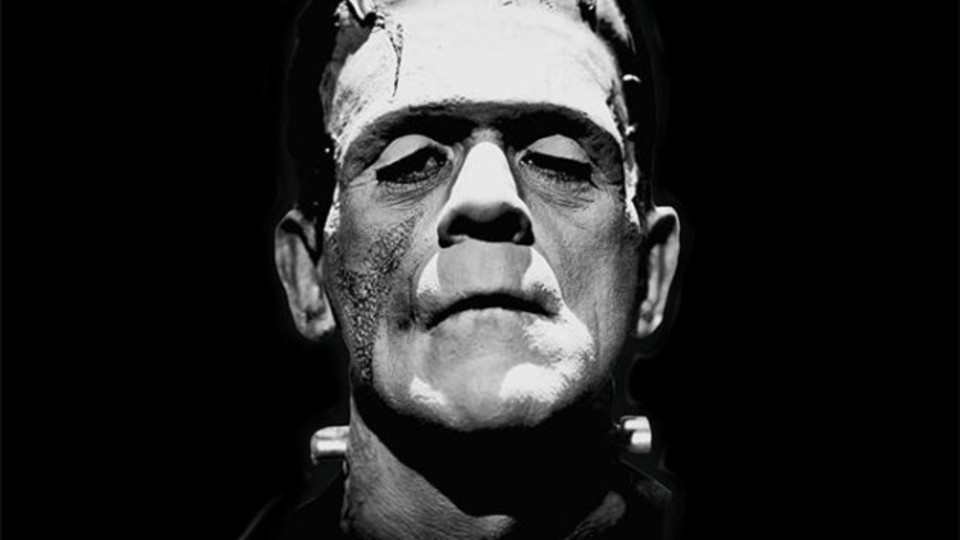
And yet it may seem disheartening when your book goes unread, or your movie pitch is ignored, or your ideas for a school club are brushed aside (wink wink, nudge nudge). But the truth is that you have already Frankenstein’d a mythological beast into existence. Your thoughts will ripple down the tides of history, and the very sharing of your idea already plays the strings of the universe like a metaphorical harp. To create, and to share, things that do not exist materially, is to impose upon the universe our own rules. To create little fires that will not only last long after our deaths, but only go out, gloriously, with all others, when humanity lets out its final breath.
 Tiny Hydra
Leave a comment